Friday, September 11, 2009

The Girl With The Dragon Tattoo- Cinnamon's thoughts

note- this may give away details of the plot....


A satisfying read. All the loose ends tied up at the end. A substantial plot with several climaxes. As a crime thriller though, not for the fainthearted. If this were a film it would have a rating of '18' at least. The scenes of sadistic rape and torture were painful to read. Each section of the book is introduced by a presumably accurate statistic about the extent of sexual violence and domestic abuse against women in Sweden. Shocking. I am uncertain whether the cause of these women is served by fictionalising this violence. Larsson makes good points about the role of power and its misuse in these situations. Although Lisbeth's revenge (against her guardian) is clever, I was uncomfortable knowing that our justice systems today are up against people of such cunning evil that no other option would be open to a victim. Abduction, torture and murder of disenfranchised women continues today and the novel seems to suggest that the high-profile serial-killer cases that come to light are just the tip of the iceberg.


The evil of fascist, neo-Nazi politics and the criminal activities of big corporations are other causes for reflection. As is the apparent ease with which it is possible for someone with the know-how to hack into a computer. I have been so naive!


I was surprised when the name of Enid Blyton came up when the authors on a bookshelf (was it Henrik's?) were listed. I later read that Larsson was a fan, also of Astrid Lindgren, author of Pippi Longstocking- on whom he based the character of Lisbeth ( a grown-up version). Mmmm.. a very grown up version!


There were many autobiographical elements- the author himself was a journalist, a vehement anti-nazi campaigner, a publisher of Expo, an independent Swedish anti-racist magazine, and himself a veteran of death threats. So we can surmise the character of Blomkvist is based on Larsson. Sadly the author, a 60-a-day smoker and a workaholic, died aged 50 from a heart attack in 2004- take note any driven authors out there.


I thought the pacing of the book was brilliant- considering the 2 main investigators do not even meet until the middle of the book, the threads of the strory were very cleverly woven. I thought all the characters were plausible (even Lisbeth)- but it is not edifying to think that we are so flawed as these characters are portrayed. It is not edifying to think that relationships are carried on in the absence of love. It is not edifying to think of the skeletons in our family histories- but all sadly plausible.

When we read the Martha Grimes I felt I was an outsider trying to get to grips with a group of characters that had a history together. The same is true of other series of books- Enid Blyton's 'The Famous Five', for example- you can't just read one in isolation- you have to read to read them in sequence. Larsson has 2 more in this trilogy. I am very tempted to see where he takes these characters next...

Friday, September 4, 2009

Sunday, August 16, 2009

Fugitive Pieces- Cinnamon's thoughts

I found the first part of this book to be both a sobering and heartening read. 'Enjoyable' is not the word, considering the subject matter- the massacre of seven year-old Jakob's family at Nazi hands, his escape to Greece and the profound effect that witnessing this and other horrors has on his life, including his haunting by his murdered sister Bella. The message is eventually of healing; a peace that comes through the self-expression of poetry.


The relationship between Jakob and his rescuer/'Godfather' ('koumbaros'), was well drawn- the tenderness and respect they have for each other; their shared suffering resulting in a mutual understanding which can only be described as pure love.


Jakob receives a most amazing education from geologist Athos, who literally digs him out of the mud at Biskupin. Athos has a grip on our rootedness (if there is such a word!) in history and on the earth.
"What is a man", said Athos, "who has no landscape? Nothing but mirrors and tides."
I loved the descriptions of Greece, their friendships, their conversations, their shared discoveries.


Jakob speaks Yiddish, Polish and a smattering of German. With Athos he learns Hebrew, Greek and eventually English. The redemption of language is displayed in this novel. For Jakob, remembering his experiences in Polish or Greek is too painful- the memories are bound up in the language. However he finds that English is one step removed "English could protect me; an alphabet without memory". He starts to write poetry and makes the telling statement "Poetry, the power of language to restore".


Anne Michaels, the author, skillfully weaves in snippets of stories about Nazi occupation of Greece and their treatment of the Jewish people- each atrocity revealed by a hint or a glimpse fills the reader with fresh horror. It is very difficult to write about such subject matter in a work of fiction, but I think the author does it well. Such is her evocation of the effects of these horros on the survivors that when in part 2 Ben's father (a ghetto survivor and escapee) tries to enrol for a Canadian pension and comes face-to-face with an ex-Nazi (one presumes) now working in Canadian civil service, the cruelly whispered words "you do not have the right papers" sends chills down the spine.


Jakob talks about photographs he later sees of Nazi officers carrying out their 'duties'- how their faces are are captured laughing as if they do not believe they are doing anything wrong- as if they really believe that the people they are humiliating are not part of humanity- they are less than human- they are vermin. Jakob does not believe this however- he does not believe that they didn't know. He believes that deep down they each knew their victims were fully human. Their faces are lying, he says, and he finds this frightening. "If truth is not in the face then where is it? In the hands! In the hands!"


The second part of the story attempts to relate Jakob's story and experience to Ben, the son of a ghetto-survivor. The author wishes, I think, to show how history effects subsequent generations on a personal level. Ben comes to understand, for example, that his father's unusual behaviour and intense sadness around food; the fact that his mother sometimes has to soothe his father's head as he eats, can be explained by the dehumanising experiences of starvation in the ghetto.


Whilst the author makes some important observations here, I found this second part of the book more difficult to read- partly because I was still too lost in Jakob's story and still too amazed by his miraculous relationship with Michaela, to really want to focus on Ben and his relationships. The scenes of him picking through the deceased Jakob's possessions would ring true with anyone who has had to clear the belongongs of a deceased family member. I thought it was interesting that Ben found that Jakob had a collection of buttons- maybe this was Jakob's way of connecting with his mother who was sewing on buttons at the time of her death and all the boy Jakob could hear was the sound of the buttons clattering onto the floor...


So those are my thoughts! I am yet to find out if Jakob Beer was a real poet as is implied by the preface, or whether he has any published work. I'm off to google...

Sunday, August 2, 2009

Fugitive Pieces mini-Review

Well, like the last book, this one took me way too long to read. I again resorted to speed reading otherwise I'd have ended up sleeping away a century. I won't say much about this book, but will wait to see what other may say.

I have read several stories with this narrative style. I've written in this narrative style. I've come to the conclusion that I don't like this narrative style. I especially didn't like it toward the last 50 pages when I completely lost the thread of the story and the narrator changed and started talking in the second person.

What's that about? Again, I've written using 'you' instead of 'I' or 'he/she'. But that was one short story and the narrator never changed. Didn't like it this time.

I guess I didn't like it. Sorry to be so negative.

I did like the point about the gradual instant though. That was nifty. I can imagine long convos dedicated to the gradual instant.

Thursday, July 30, 2009

Next Month and the Month After

I'm still reading Fugitive Pieces. Took a long time to pick up the book and it's a slow starter (for me anyway). Just plow through Banyan Tree Meg. I had to use my speed reading skills (which I don't like to do when reading novels) otherwise I would never have gotten through it.

Ok, well through the use of careful deliberation, cold logic, and the process of elimination (eeny-meeny-miney-moe), I got our list down to 'The Girl with the Dragon Tattoo' for August and 'The Sheltering Sky' for September. I have already started on 'The Plague' as our July Reading isn't holding my attention long enough to just read the one book.

What's this 'Book Lust'? I've rubbed a book all over me because it was so good. But that's a private moment between me and my book.

Tuesday, July 28, 2009

August

Is anybody there?

Has anyone a suggestion for August reading? There are a few books I'm interested in reading (actually several). I will list them here. These are just suggestions of course.

-The Girl with the Dragon Tattoo (Stieg Larson)
-The Sheltering Sky (Paul Bowles)
-The Plague (Albert Camus)
-The Deptford Trilogy (Robertson Davies)
-The Spirit Catches You and You Fall (Anne Fadiman)
-The Windup Bird Chronicles (Haruki Murakami)

Thursday, June 25, 2009

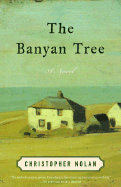
Warning--There might be a spoiler or two...The Banyan Tree

I had such a difficult time getting through this book. I started it at the beginning of the month and only finished it last Friday. That’s over two weeks! Just to read one book. Mind, I was reading other books that I had to put on hold while slogging my way through this book.

Well, I immediately appreciated the richness of language and imagery. Dense and one I was able to muddle my way through it all, quite beautiful. But as I would explain to colleagues who all wondered why I was reading the same book for over a week, let alone over two, I kept wondering when the f*** the story would start. Yeah, yeah, it’s the story of the life of a woman. I get it. But why not just write my story? Or my mom’s? Or my grandmother’s? Now that would’ve been a story. Like the time she used to hop the trains to Salinas to go dancing and only return home before dawn, her parents never knowing what she did, or the time she wrote the Pope after her divorce and being excommunicated and then storming the church, telling the parish priest what-for. Now that would have held my interest. But as it was, I had to force myself to speed read, which I don’t like to do when reading novels as I enjoy the plodding slowness of savoring every word as it trickles through my mind.

Still, as I said, I did understand that the story was beautifully written, three dimensional and layered. I just couldn’t get into until after the husband died. Then it started picking up for me. But I wondered why this story was written, a devoted wife, loving husband, children. Children who all leave and are barely developed, only developed enough to grasp the idea that they leave home and never want to return. Why? And why not someone else’s story?

Anyway, I’ll wait to discuss more after more posts.

Hope you all have happier reading.